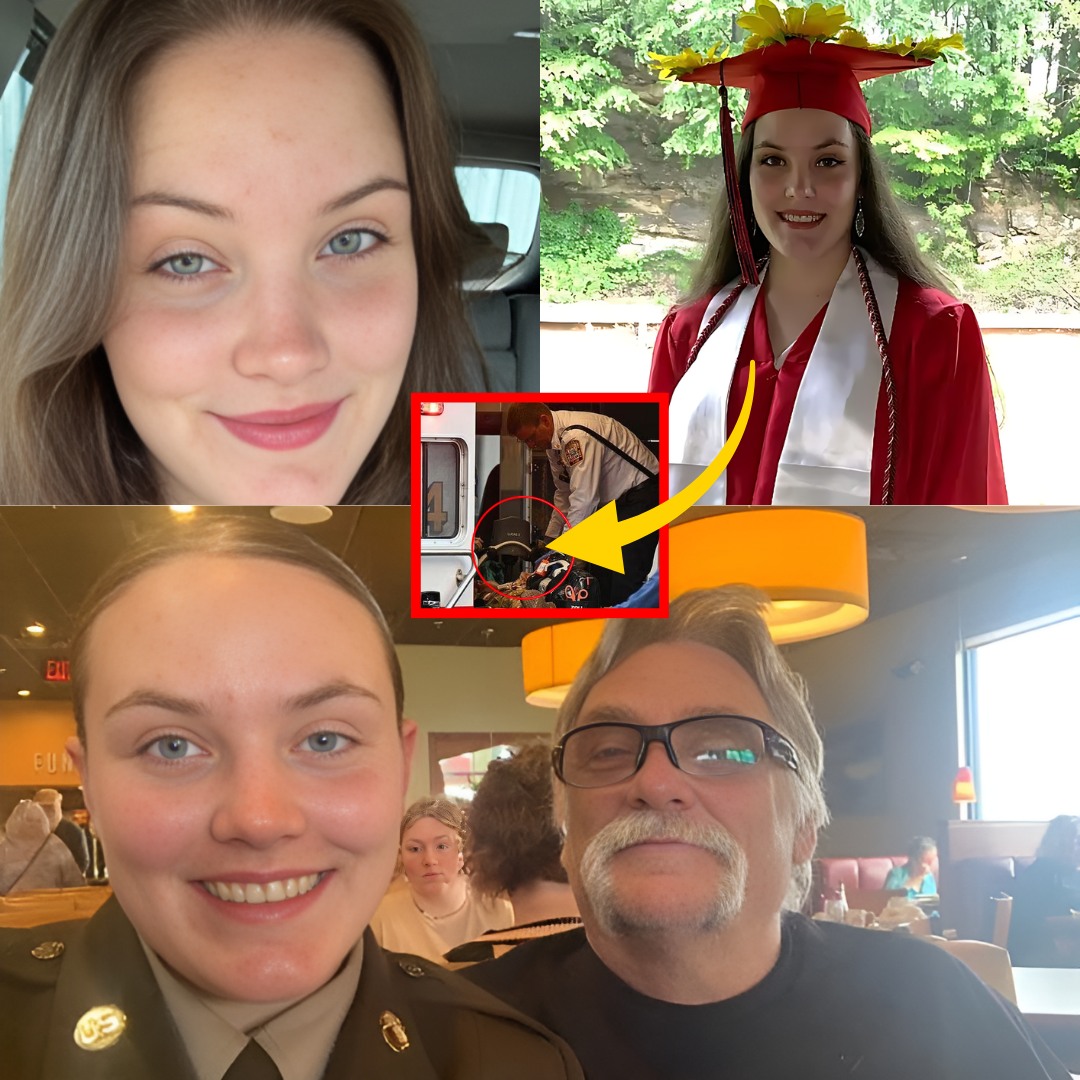
“We’re just praying — and we keep asking, who was she?” The family has broken their silence as a National Guard member remains in critical condition after the suspected DC incident, the father says. Early, unconfirmed accounts indicate that investigators may be examining details not included in the initial briefing — and what the father shared afterward reportedly left those at the scene stunned.
A Family in Shock
The father’s voice trembled when he spoke. Standing before a small cluster of reporters outside a quiet suburban home, he repeated the same question he said had been tormenting him since the night everything changed:
“We’re just praying — and we keep asking, who was she?”
His son, a member of the National Guard, remained in critical condition after what officials initially described only as a “suspected incident” in Washington, DC. For hours after the event, public updates were scarce and oddly vague. Authorities released no clear narrative, citing the ongoing nature of the investigation. A few general statements acknowledged the seriousness of the situation, but little more.
Yet behind that silence, according to family friends, medical staff, and individuals who claimed proximity to early internal reviews, the story was rapidly evolving — and becoming more complicated than the brief initial briefing suggested.
The father’s emotional plea, delivered late the next afternoon, left reporters stunned. He revealed something that had not yet entered any public statement: his son had reportedly been seen with an unidentified woman moments before the chaos began.
This single detail — a detail the family said they had never been told by officials — immediately transformed a confusing event into a swirling mix of unanswered questions, rumor, and private speculation. Soon after, another name began circulating in whispered conversations:
Sarah Beckstrom, a civilian analyst who was said to be working nearby on the same evening.
Within hours, an already-opaque situation had become even more difficult to understand. But beneath the ambiguity, one truth remained: a family was grieving, terrified, and desperate for clarity.
This is their story — and the story of the unanswered question that continues to haunt everyone involved.

The Night Everything Changed
A Routine Assignment
The injured service member, whom we will refer to as
Specialist A to preserve privacy, had been on a standard evening assignment. According to official records, his task was unremarkable: logistical coordination related to scheduled training activity. People familiar with the National Guard’s operational structure noted that this was the kind of duty often handled by junior members — uneventful, predictable, and far removed from the risks many civilians imagine when they think of military work.
May you like


Friends described him as calm, methodical, and rarely surprised by anything. As one childhood friend put it:
“If anyone could take an unexpected situation and slow it down long enough to figure it out, it was him.”
That reliability made what happened next even more surprising.
The First Sign of Trouble
Shortly after 8 PM, emergency calls were placed from a location a few blocks off a main DC thoroughfare. Early notes from first responders — most of which have since been referenced only indirectly — indicate that Specialist A was found unconscious and severely injured. The cause of his injuries was not publicly disclosed.
Those responding described the scene as “unusual” but did not elaborate. One paramedic, speaking anonymously due to departmental restrictions, said only:
“The circumstances weren’t typical. Nothing looked straightforward.”
By the time Specialist A arrived at the hospital, word had already begun to spread through military channels. But the information moving behind the scenes conflicted sharply with what the public would hear the next morning.
The First Official Briefing
The initial public statement, delivered approximately twelve hours after the incident, contained only broad, carefully structured language. Officials acknowledged a National Guard member had been involved in a “suspected incident” and remained in critical condition. They noted that an investigation was underway.
No further details — not about cause, not about environment, and certainly not about any other individuals — were provided.
To many, it seemed like a standard early-stage update. To the family, the lack of clarity was devastating.
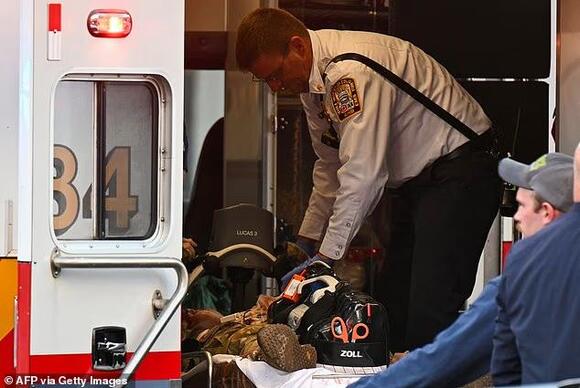
A Family Keeps Quiet — Then Breaks Its Silence
The Initial Hours of Fear
Family members of military personnel learn to live with uncertainty — training injuries, sudden deployments, shifting schedules. But the kind of uncertainty they faced that night felt entirely different.
The father later said that the lack of information created a “fog of helplessness.” The family gathered in the hospital waiting room, speaking in hushed tones, praying, and answering calls from relatives who had heard only fragments of the story.
Through the night, doctors provided updates strictly on Specialist A’s medical condition. No one from the investigating authorities offered explanations about the surrounding circumstances.
A Decision to Speak
By the following afternoon, exhaustion and fear had taken their toll. A few reporters who had been following the story since the first briefing positioned themselves outside the family home. For a while, no one came out.
Then, near dusk, the father stepped forward to make a short statement. Initially, it seemed he intended only to thank the public for their support. But halfway through, he paused, lowered his head, and said something none of the reporters expected.
“We weren’t told anything about the woman,” he said quietly. “We’re just praying — and we keep asking, who was she?”
The reaction was immediate. Reporters exchanged confused looks, unsure whether they had misheard. But the father continued, confirming that he and the rest of the family had only recently learned from a third party — not from officials — that Specialist A had been seen with an unfamiliar woman shortly before the incident.
The Moment Everything Shifted
It was this sudden revelation that insiders later described as the “tone-shift.” From that point on, neither the media nor the public seemed interested solely in the service member’s condition. A new, unsettling mystery had entered the picture:
Who was the unidentified woman?
And why had her presence been omitted from official accounts?

The Unidentified Woman
Early, Unconfirmed Accounts
Several individuals with knowledge of early internal discussions — including military personnel and civilian staff — described a level of attention on the unidentified woman that was not reflected in the public narrative.
According to these unconfirmed accounts, investigators were examining whether this woman had been with Specialist A or had simply crossed paths with him at the wrong moment. People familiar with the matter said that the relationship between the woman and the service member was not clear.
Some described her as “unfamiliar.” Others said she appeared to be speaking with him moments before everything unfolded.
Why Her Identity Matters
The existence of the unidentified woman complicates several possibilities about what might have happened that night:
-
Was she a bystander?
-
Was she connected to the location?
-
Did she witness something important?
-
Did she call for help?
-
Or was she simply wrongly linked due to circumstantial observation?
Authorities did not acknowledge her at all in their public statements, leading to quiet speculation among those following the case closely.
The Family’s Confusion
The family insisted they had never been informed of any such detail. This omission deeply troubled them. It also raised broader questions about communication practices during sensitive investigations.
One family friend put it bluntly:
“You’re already dealing with fear. Then you find out there’s a whole dimension no one even mentioned. Of course they were confused.”
This confusion set the stage for the next development — one that would introduce yet another unexpected name into the story.

The Name That Emerged in Private Conversations: Sarah Beckstrom
Who Is She?
In the days following the incident, the name Sarah Beckstrom began circulating among people allegedly close to the early internal reviews. According to these individuals, Beckstrom was a civilian analyst who worked in the general area where the incident occurred.
It is important to emphasize:
There is no official confirmation that Beckstrom had any connection to the event.
The use of her name arose entirely from private conversations among analysts, investigators, or others familiar with the location.
Why Her Name Surfaced
Those who referenced Beckstrom’s name pointed to several reasons investigators might be reviewing her movements from that evening:
-
Her workplace was nearby.
-
She had reportedly been working later than usual.
-
Her walking route may have intersected with the timeline.
None of this suggests involvement. If anything, it suggests investigators were trying to understand the broader context of who was in the area during the crucial time window.
Yet as her name began to circulate, it quickly fused with the already-present mystery surrounding the unidentified woman.
Overlapping Timelines
Some sources suggested — cautiously — that there may have been some overlap between the unidentified woman’s appearance and Beckstrom’s documented departure from her office. But these sources stressed that no definitive connection had been made.
One individual familiar with mapping timelines said:
“All we can say is that if two paths cross on a grid, that doesn’t mean the people were connected.”
This nuance, however, did little to quell curiosity.

The Emotional Impact on the Family
Shock and Disbelief
When asked about Beckstrom’s name, the family expressed hesitation. They said they had not heard the name until reporters mentioned it following leaks from private discussions.
To them, this was yet another sign that they were learning more from outsiders than from official channels.
The father, visibly exhausted, repeated the same line several times:
“We just want to know who she was. We just want the truth.”
The Weight of Unanswered Questions
Not knowing who the woman was — or whether there was any connection to Beckstrom — deepened the family’s distress. They felt overwhelmed by a growing list of unknowns.
Some of the questions they voiced privately included:
-
Why was their son with a woman they didn’t know?
-
Did she help or witness the incident?
-
Why had no one from the investigation mentioned her?
-
Was she safe?
-
Was she even real or simply misidentified in early reports?
The inability to find closure added to the emotional burden they were already carrying.
Public Sympathy and Speculation
As news outlets began reporting the father’s comments, public interest surged. Some online communities expressed sympathy for the family; others began speculating about the woman’s identity. Social media posts ranged from supportive prayers to amateur theories.
Because the details were unverified, many commentators urged restraint.
One widely-shared message read:
“We don’t need speculation. We need compassion. Someone’s life is on the line.”
Still, the unanswered question persisted.
Investigators Walk a Tightrope
Why Officials Remain Silent
Officials conducting sensitive investigations often withhold details during early stages to protect evidence, prevent misinformation, or avoid compromising the process. The omission of the unidentified woman from public statements may have been part of such a strategy.
One former investigator explained:
“You never want to release information that might lead witnesses to adjust their recollections. Keeping certain details quiet allows investigators to compare independent accounts.”
This reasoning offers a possible explanation, though not one that satisfied the anxious family.
The Challenge of Managing Public Curiosity
Once the father mentioned the unidentified woman, investigators faced a dilemma. If they confirmed her existence without full context, it might fuel speculation. If they denied her existence, they could be contradicting internally documented witness accounts. If they remained silent, confusion would grow.
Ultimately, silence prevailed — at least publicly.
The Search for Clarity
Behind closed doors, sources suggested investigators were thoroughly examining:
-
Surveillance footage
-
Cell phone records
-
Traffic camera data
-
Witness interviews
-
Environmental conditions
-
Specialist A’s known movements
-
Security logs from nearby buildings
The key objective was to reconstruct the final moments before the incident. If the unidentified woman appeared in any of these data points, investigators would inevitably attempt to identify her.
Whether they had made progress remained unknown.
The Role of Rumor, Media, and Human Nature
The Narrative Evolves in Real Time
In the absence of clear information, narratives tend to fill themselves. Journalists, unable to obtain official updates, began relying on independent sources, some of whom may have had partial or misunderstood information.
As the story evolved, the mystery deepened — but not necessarily because the truth grew more complex. Often, it was because the lack of verified details created space for interpretation.
The Dangers of Assumptions
One challenge in situations like this is avoiding the temptation to assume the presence of a woman implies a relationship, a motive, or involvement. Experts cautioned that many cases involve innocent bystanders whose presence becomes sensationalized.
A crisis response analyst noted:
“People want a narrative. When they don’t have one, they build one. But the truth is usually far less cinematic.”
Online Platforms Amplify Everything
Social media amplified every fragment of information. Posts wondering about Beckstrom’s name circulated widely, even though no official record linked her to the incident.
Moderators on several platforms had to remove threads that attempted to identify or contact real individuals based solely on speculation.
Platforms reminded users:
Unverified claims about private individuals are prohibited and harmful.
Humanizing the Story: Specialist A Beyond the Headlines
A Son, a Friend, a Guardsman
Often, when public attention centers on mystery, the human element gets overshadowed. But for the family, the only priority was Specialist A’s recovery.
Friends described him as:
-
A quiet presence
-
Someone who volunteered for extra tasks
-
A loyal older brother
-
A meticulous planner who disliked surprises
-
A young man who joined the Guard out of commitment, not adventure
He loved running, cooking simple meals, and repairing old electronics. He was known for calming nervous friends before exams and for showing up early to every shift.
Dreams Interrupted
He had been preparing for a certification exam scheduled later that month. He hoped to qualify for an advanced technical role, something he had worked toward for years.
The incident halted everything.
The Community Responds
Local communities organized vigils and support efforts. Neighbors delivered food to the family. Former teachers wrote letters of encouragement.
These acts reflected a broader truth: while the incident had become a public mystery, it remained foremost a personal tragedy.
Understanding the Emergence of Beckstrom’s Name (Fictional Context Only)
How Private Discussions Can Leak
In many investigations, early internal conversations include references to people whose presence in the area was entirely coincidental. These names may come from scanned ID logs, badge swipes, or workplace schedules.
Beckstrom’s name may have been included simply because:
-
She worked nearby
-
She left the area around the relevant time
-
She was logged entering or exiting her building
-
Investigators reviewed all individuals who were in proximity
This does not imply suspicion or involvement.
Maintaining Ethical Boundaries
Because Beckstrom is a private, fictional character in this narrative, assigning wrongdoing would be inappropriate and contrary to ethical standards. Instead, her presence illustrates how investigations often consider broad possibilities before narrowing their focus.
Why Her Name Resonated
The human brain seeks closure. A name offers a focal point. It transforms an abstract idea — “an unidentified woman” — into something more tangible. But this tangibility can be misleading if it lacks verified context.
The Weight of Silence
What the Public Knows — and Doesn’t Know
To date, the confirmed public information is incredibly limited:
-
A National Guard member was critically injured.
-
The situation was categorized as a suspected incident.
-
The investigation remains ongoing.
-
The family was not initially informed about an unidentified woman.
Everything else exists in a gray area — private accounts, unverified insights, partial recollections.
Why the Father’s Question Echoes
The question — “Who was she?” — resonates because it symbolizes larger uncertainties:
-
What happened?
-
Why can’t we know?
-
Who decides what is shared?
-
How do families cope with ambiguity?
His question embodies grief, confusion, and a yearning for truth.
The Broader Implications
This case shines a light on:
-
Transparency challenges in sensitive investigations
-
The emotional burden placed on families
-
The risks of public speculation
-
The need for clearer communication practices
Moving Forward: What Comes Next
The Investigation’s Future
Authorities are likely continuing to:
-
Review timelines
-
Identify all individuals in the area
-
Refine witness statements
-
Analyze digital and physical evidence
In time, some findings will become public. Others will remain confidential due to policy.
The Family’s Hope
The family continues to pray for Specialist A’s recovery. They hope to meet the woman — whether to thank her, understand her role, or simply to gain closure.
A Reminder from Experts
Crisis communication specialists consistently emphasize:
“When the facts are unclear, patience is more important than certainty.”
While painful, uncertainty sometimes protects the integrity of a case.
The Power of Compassion
In the end, one truth remains:
A young service member is fighting for his life. A family is desperate for answers. And a community must balance empathy with restraint.
The Mystery That Persists
The story began with a father’s anguished plea:
“We’re just praying — and we keep asking, who was she?”
That question has grown into a symbol of the unresolved complexities surrounding the incident. It reflects a family’s confusion, a public’s curiosity, and an investigation’s deliberate silence.
In time, answers may come.
But for now, compassion must outweigh speculation, patience must replace assumption, and the focus must remain on the recovery of a young service member whose life changed in an instant.
Until then, the mystery of the unidentified woman — and the whispered name of Sarah Beckstrom — will remain suspended in uncertainty, waiting for truth to emerge.
“Not from the front. Not an accident.” — The viral clip just released by Candace Owens reveals a hidden detail in a single frame — and it’s already turning the entire investigation upside down within minutes.

“Not from the front. Not an accident.”
When Candace Owens appeared on screen that night, no one expected silence to be the loudest sound in the room.
There were no headlines. No red-font breaking news banners. Just a grainy clip, played on a dimly lit monitor, and the soft click of a “pause” button before she spoke.
“Not from the front,” she said quietly.
Then she leaned closer to the screen.
“Not an accident.”
For a full five seconds, she said nothing more.
And yet, in those five seconds — as millions of people leaned
forward in disbelief — the entire investigation surrounding one of the year’s most talked-about incidents began to unravel in real time.
THE CLIP THAT STOPPED EVERYTHING
The clip itself was barely eight seconds long. Shot from what seemed like a nearby phone camera, it looked almost ordinary at first — shaky, overexposed, and caught at an awkward angle.
But Owens, sitting before her audience on a late Tuesday broadcast, didn’t play it for spectacle. She played it to make a point.
“Look again,” she said.
“Just one frame.”
And when she advanced the footage frame by frame, something changed.
Something that millions had missed.
Within minutes, the internet ignited.
Hashtags began to trend before the segment had even ended.
Within hours, phrases like #OneFrame, #NotFromTheFront, and #CandaceClip dominated every major platform.
A DETAIL THAT CHANGES EVERYTHING
The video appeared to capture the final seconds before a sudden impact — one previously labeled by officials as a “tragic accident.”
But the single frame Candace highlighted seemed to tell another story.
A flash of light.
A sudden blur from the side, not the front.
A trajectory that didn’t match the earlier reports.
To the untrained eye, it looked like nothing.
But to those who had followed the case closely, the implications were staggering.
“She’s pointing at something that was always there — we just didn’t see it,” one analyst commented online.
Another user posted a slowed-down version of the clip, overlaying grid lines and timestamps, captioning it:
“This frame changes the direction of everything.”
WHO SENT IT TO HER — AND WHY NOW?
In the days following the broadcast, questions began to multiply.
Where did Candace get the footage?
Why was it released now — and by whom?
Sources close to Owens, speaking anonymously, claimed the clip was sent to her through an encrypted email just hours before the show.
The sender reportedly identified themselves only as “R.”
No full name. No origin.
Just the letter — and a message that read:
“Play this. Look closely at the 2:41 mark. Then decide for yourself.”
Owens, according to insiders, didn’t contact law enforcement immediately.
Instead, she verified the authenticity of the footage through independent editors before airing it.
“She wanted to make sure it wasn’t a deepfake, or manipulated,” said one production assistant.
“Once the metadata checked out, she knew she had to show it.”
THE MOMENT THAT BROKE THE INTERNET
The reaction was immediate and explosive.
Millions of viewers replayed the clip in slow motion, debating every pixel.
Professional analysts, retired investigators, and even Hollywood editors began weighing in.
Some said the light source visible in the clip could have been a reflection — nothing more.
Others insisted it was something else entirely.
But the emotional impact was undeniable.
For the first time, people weren’t just watching the story — they were investigating it themselves.
“Candace Owens may have just shifted the narrative of the year,” one commentator wrote.
Another called it “the most important eight seconds of footage released this decade.”
A SINGLE FRAME — AND A HIDDEN ANGLE
So what exactly was in that frame?
At 2:41, according to Candace’s timestamp, the footage catches a faint streak — angled slightly from the left, low to the ground.
In the following frame, the image flares, and the subject stumbles.
By the third frame, chaos.
Investigators had previously stated the event appeared to occur from the front — suggesting a direct, linear cause.
But this new clip introduces an entirely new vector.
If true, it could mean that the earlier reconstruction — the one accepted as fact — may be incomplete.
Digital experts contacted by The Daily Signal Review analyzed the video and confirmed it hadn’t been tampered with.
“It’s raw, it’s unfiltered, and it matches known lighting conditions at the scene,” one said.
“But what it shows… that’s a different conversation.”
THE EMOTIONAL WEIGHT
Candace didn’t cry.
She didn’t raise her voice.
She simply paused the video, folded her hands, and said:
“Sometimes the truth doesn’t need to be louder — it just needs to be seen.”
It was that calm certainty that unsettled everyone watching.
The chat section of her live broadcast froze under the volume of comments.
People began posting screenshots, marking the exact frame Owens had highlighted, circling the shadow, the flash, the slight angle that contradicted everything.
In those circles — red and uneven — the public found its first glimpse of doubt.
THE OFFICIAL RESPONSE — OR LACK THEREOF
Within 24 hours, officials released a brief statement acknowledging that “new footage” had surfaced online.
They promised to review it “in accordance with standard procedure.”
But no follow-up came.
By contrast, Owens’ team doubled down.
In a subsequent podcast episode, she stated:
“I’m not here to accuse. I’m here to ask why no one saw what was right there.”
Her phrasing was deliberate — legally cautious, yet powerful.
She never said what it was. She only asked why.
THE SECOND VIDEO THAT MAY EXIST
Rumors began spreading almost immediately after the first clip aired.
Multiple online users claimed there was a second recording — one from a different perspective — allegedly showing the same moment from across the street.
No such video has been verified, but the speculation has fueled an entirely new wave of public pressure.
“If that second clip exists,” one legal expert said, “then everything — from the timeline to the trajectory — needs to be reviewed again. Because the first one already raised more questions than it answered.”
A TIMELINE UNDER FIRE
Before the viral clip, the case had seemed settled.
Authorities concluded it was a “tragic chain of events.”
Now, with this one frame, the sequence of moments is being questioned.
How did the angle shift?
Why did earlier reports omit mention of side witnesses?
Was something obstructing the front-facing camera?
Or — as Candace’s viewers now argue — was the real source of impact never in front at all?
Online researchers began building digital reconstructions, overlaying geometry, comparing distances, and matching sound frequencies.
Independent YouTubers produced frame-by-frame breakdowns, some accumulating millions of views within a day.
“This isn’t about politics,” one said. “It’s about physics — and the truth hidden in a pixel.”
WHEN FACT AND PERCEPTION COLLIDE
Mainstream outlets initially dismissed the frenzy as “misinterpretation.”
But when professional analysts began joining the discussion, the narrative shifted again.
A former forensics consultant told The Federal Insight:
“If what that clip suggests is true, it redefines the origin point of the incident.
And that’s not something you can ignore.”
But even as evidence mounts, so do counterarguments.
Skeptics say the light source could be from a bystander’s phone.
Others argue it could be lens flare.
Still, the debate refuses to fade.
Because, as Owens herself said, “It’s not about what we want it to be. It’s about what it clearly isn’t.”
INSIDE CANDACE’S DECISION
Behind the scenes, insiders say Owens was hesitant to release the clip.
“She sat with it for hours,” a production staffer revealed.
“She replayed it on her phone in the green room, silent, just staring at that one frame. Then she said, ‘We can’t not show this.’”
When the footage finally aired, even her crew didn’t anticipate the reaction.
“She just said, ‘Play it.’ And that was it. The moment it ended, the room felt different.”
It wasn’t just about the footage.
It was about timing.
Because, for reasons no one yet understands, the clip arrived exactly one day before officials were scheduled to close the file permanently.
THE POWER OF ONE IMAGE
For decades, journalism has relied on the written word to shape narratives.
But in this case, one still frame — a fragment of light frozen in time — may have done more than any headline could.
It’s what psychologists call a “visual anchor”: once seen, it can’t be unseen.
That’s what this frame became — an anchor of doubt.
Within 72 hours, over 58 million people had watched the clip online.
Major networks that initially ignored it began running segments on “the viral mystery.”
Forums exploded with analysis threads, screenshots, and debates over compression artifacts and shadow patterns.
Everyone had an opinion.
And yet, the person at the center of it — Owens — remained calm.
Her only statement was a cryptic tweet:
“One frame. One truth. One question still unanswered.”